The Complete Guide to Construction Safety Inspections in 2026
In 2023, 5,283 workers died on the job in the United States. That's 3.5 fatalities per 100,000 full-time equivalent workers, and construction accounts for a disproportionate chunk of that number. Behind each statistic is a real person who went to work and didn't come home.
A well-run construction safety inspection program won't eliminate all risk. But it will catch the conditions that turn into incidents before they do. It creates accountability. It builds a paper trail that protects your company if something does go wrong. And it signals to every worker on your site that safety isn't just a poster on the trailer wall.
This guide covers what you actually need to know about construction safety inspections in 2026: what OSHA expects, what to include on your inspection checklists, how to handle equipment inspections, and where digital tools make the whole process less painful.
What Is a Construction Safety Inspection?
A construction safety inspection is a structured review of jobsite conditions, equipment, and work practices to identify hazards before they cause harm. It's distinct from an OSHA compliance audit, though the two overlap. Your internal inspections are proactive. OSHA's are reactive — they show up after a complaint, a referral, or a fatality.
There are several types of inspections you'll run on a typical project:
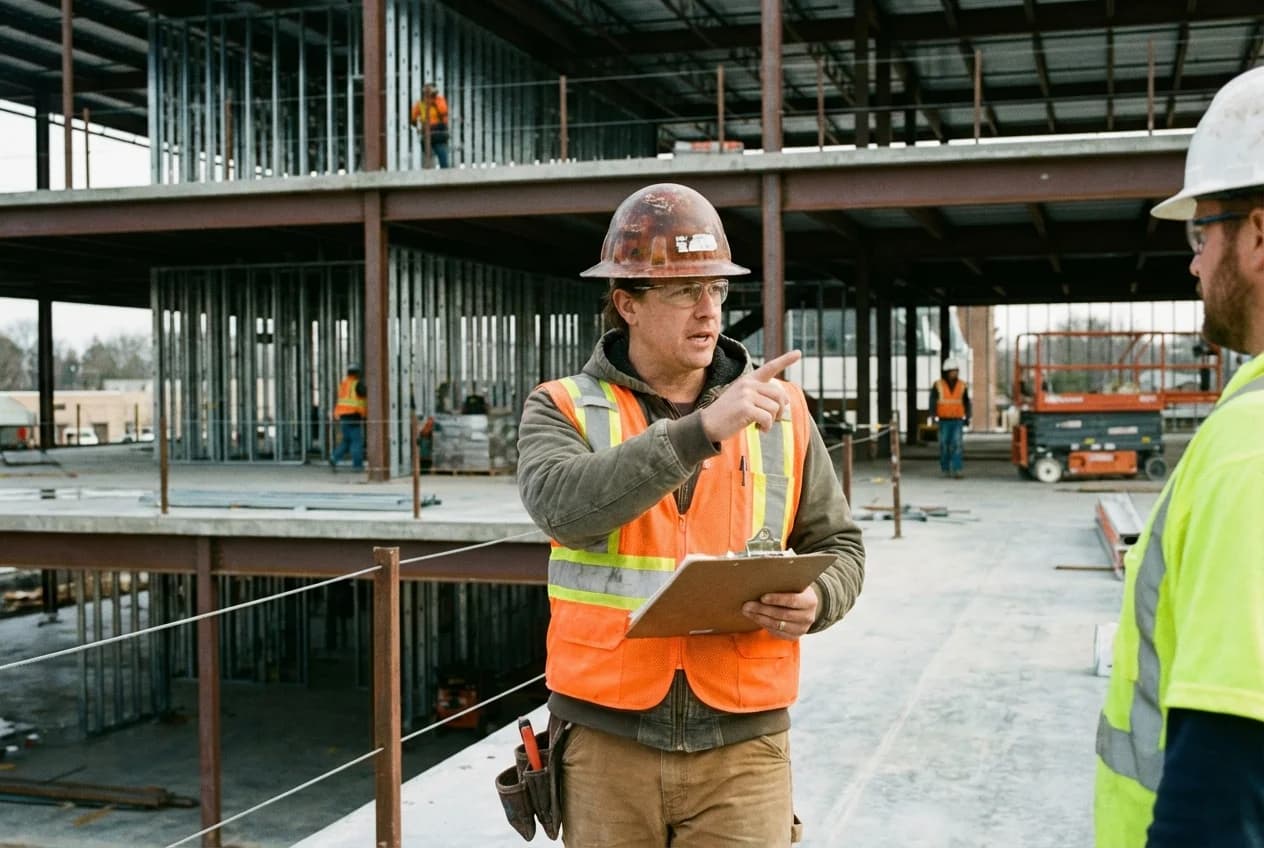
Pre-task inspections happen before work starts each day or before a new scope begins. A crew lead walks the area, checks conditions, and confirms the work environment is safe. These are fast — five to ten minutes — but they catch a lot.
Formal safety inspections are scheduled, documented reviews conducted by a safety manager or superintendent. These typically cover the whole site and happen weekly or bi-weekly on active projects.
Equipment inspections are specific to tools, machinery, and safety gear. Cranes, forklifts, aerial lifts, fall protection harnesses, fire extinguishers — all of it needs to be checked on a defined schedule.
Permit-required inspections tie directly to permit workflows. Hot work, confined space entry, lock/tag/try — before work can start, a competent person has to inspect conditions and sign off.
Third-party and OSHA inspections are external. OSHA conducted 34,696 federal inspections in FY 2024. With roughly 1,850 inspectors covering approximately 130 million workers — about one inspector per 70,000 workers — the odds of an unannounced visit on any given day are low, but the consequences when it happens are significant.
The Focus Four: Where Construction Fatalities Actually Come From
OSHA's Focus Four hazards account for the majority of construction fatalities every year. If your inspection program doesn't specifically address all four, you have gaps.
Falls are the leading killer in construction. They're also the number one most-cited OSHA standard year after year — Fall Protection topped the list again in FY 2024. Every inspection should verify that guardrails are in place and intact, that workers at height are tied off when required, and that scaffolding is properly erected and planked.
Struck-by incidents involve workers being hit by moving vehicles, swinging crane loads, flying debris, or falling objects. Your inspection checklist needs to address exclusion zones, hard hat compliance, high-visibility vests, and flagging procedures near active equipment.
Electrocution hazards are often invisible until they're lethal. Look for unprotected overhead power lines, improper use of extension cords, missing GFCI protection, and work happening too close to energized equipment.
Caught-in/between incidents include trench collapses, unguarded machinery, and workers getting caught in rotating parts. Trench inspections need to happen before each entry. Equipment guards need to be verified as installed and functional.
Actionable takeaway: Build your inspection checklist around the Focus Four first. Everything else is secondary.
Building a Construction Site Inspection Checklist That Actually Gets Used
The most common failure in construction safety inspection programs isn't skipping inspections — it's using checklists that are either too vague to be useful or so long that people stop filling them out honestly.
A good construction site inspection checklist is specific, sequential, and tied to what's actually happening on your site that week. A checklist for a concrete pour looks different from one for steel erection.
At a minimum, your weekly site inspection checklist should cover:
Administration and documentation: Are the OSHA 300 log and required postings current? Are emergency contact numbers posted? Do workers have access to SDS sheets for hazardous materials on site?
Housekeeping: Is the site free of trip hazards? Is material stored properly and not blocking egress routes? Are waste and debris being managed?
PPE: Are workers wearing required hard hats, eye protection, gloves, and high-visibility gear for their tasks? Is PPE in good condition — not cracked, torn, or expired?
Fall protection: Are all open-sided floors, holes, and excavations guarded? Is fall protection equipment inspected before use? Are ladders in good condition and properly positioned?
Electrical safety: Are GFCIs in use on all temporary power? Are cords free of splices and damage? Are overhead power line clearances maintained?
Equipment and tools: Are tools in good working condition? Are guards in place? Is heavy equipment being operated by qualified personnel?
Confined spaces: Are confined space entry points identified and marked? Are entry permits current? Are atmospheric testing records on file?
Emergency preparedness: Is first aid equipment accessible? Are emergency exit routes clear? Has the crew been briefed on emergency procedures?
FieldScout includes pre-built checklist templates covering Administration, Confined Space, PPE, and Housekeeping — the categories that come up most often in OSHA citations. They're editable, so you can tailor them to your project scope without starting from scratch every time. Workers access them directly in the browser — no app to download, no IT tickets to file. See what's available at fieldscout.io/product.
Equipment Inspection in Construction: Don't Wait for Something to Break
Equipment failure is one of the more preventable causes of construction incidents, which makes gaps in equipment inspection programs especially frustrating. The forklift that tipped because the load rating placard was missing and nobody checked. The harness that failed because it had a frayed strap that three people had already noticed and nobody flagged.
Effective equipment inspection in construction requires two things: a clear schedule and a way to prove the inspection happened.
The schedule should be driven by manufacturer requirements and OSHA standards. Daily pre-use inspections for heavy equipment and aerial lifts. Monthly inspections for fall protection harnesses and lanyards. Annual certifications for cranes and hoists. Your equipment inspection program should document all of this, not just the inspections themselves.
Proving the inspection happened is where most paper-based programs fall apart. Inspection logs get lost. Binders disappear from trailers. Someone writes 'OK' next to every item to get through the form faster.
One approach that's gaining traction on commercial sites is QR code-based equipment inspection. Each piece of equipment gets a QR code tag. When a worker scans it, they get the checklist for that specific item and can see the full inspection history. No binder to hunt down. No guessing whether that extinguisher was checked last month or last quarter. FieldScout's QR code equipment inspection feature works exactly this way — the history lives with the equipment, and anyone on site can pull it up from their phone. Read more about how it works: fieldscout.io/blog/qr-code-equipment-inspections.
Actionable takeaway: Put QR tags on every piece of equipment that requires a recurring inspection — forklifts, aerial lifts, extinguishers, fall protection anchors, first aid kits. When the history is one scan away, compliance actually happens.
Fall Protection Inspection: The Standard That Gets Everyone Cited
Fall protection has been the most-cited OSHA standard in construction for over a decade. In FY 2024, it held that position again. That's not because contractors don't know about fall protection — it's because the gap between knowing and doing is wide.
A fall protection inspection isn't just checking that harnesses are on. It covers the entire fall protection system: the anchor, the connector (lanyard or self-retracting lifeline), the harness, and the work area itself.
Anchors need to be capable of supporting 5,000 pounds per attached worker or be part of a certified fall protection system. Inspecting an anchor means verifying it's structurally sound and properly installed — not just that it's there.
Harnesses and lanyards need to be inspected before every use. Look for: frayed webbing, cuts, abrasions, broken stitching, corroded or damaged hardware, and any signs that the harness has arrested a fall (distorted D-rings, torn loops). If a harness has arrested a fall, it's out of service. No exceptions.
Self-retracting lifelines (SRLs) need to be checked for smooth retraction and extension, housing damage, and that the locking mechanism engages properly. If it hesitates, jerks, or doesn't retract fully — it's out of service.
The work area inspection covers leading edges, floor openings, rooftop perimeters, and scaffolding. Are guardrails at 42 inches? Are midrails in place? Are floor holes covered and marked?
Tamper seals are a useful tool here. Attaching a tamper seal to an anchor point, SRL housing, or harness D-ring storage bag creates a quick visual indicator that the equipment hasn't been tampered with since its last formal inspection. If the seal is broken, that triggers a re-inspection before the equipment goes back into service. FieldScout's tamper seal feature tracks seal status across your equipment inventory and sends alerts when seals are overdue for inspection — so nothing slips through. More on that here: fieldscout.io/blog/how-digital-tamper-seals-are-replacing-spreadsheets-on-construction-sites.
Actionable takeaway: Build fall protection inspection into every pre-task checklist. It takes three minutes to inspect a harness. It takes a lot longer to deal with the aftermath of not doing it.
Permit-Required Inspections: Connecting the Checklist to the Work Authorization
Some of the highest-risk work on a construction site can't start until a permit is issued. Confined space entry, hot work, elevated work platforms, energized electrical work — these require a competent person to verify conditions are safe before work begins.
The problem with permit systems that run on paper is the disconnect between the inspection and the authorization. Someone fills out a confined space entry permit, attaches it to the clipboard on the door of the vessel, and then the conditions change — a gas line gets disturbed, ventilation fails, atmospheric readings shift. If there's no mechanism to re-inspect, the permit becomes a false sense of security.
Effective permit workflows tie the inspection directly to the authorization. Before a permit is issued, specific inspection criteria have to be met and documented. If conditions change, the permit is invalidated and re-inspection is required. The trail is intact either way.
FieldScout's permit workflows are multi-stage and tied to inspection checklists. You can require atmospheric testing results, competent person sign-off, and equipment verification before a confined space permit goes live. The permit can require renewal at defined intervals. And the whole history — every permit, every inspection that backed it, every sign-off — is searchable and timestamped.
Actionable takeaway: If your permits and your inspections live in separate systems (or one of them is still paper), that's a gap. Your permit system should require inspection sign-off, not assume it happened.
OSHA Construction Inspections: What to Expect and How to Prepare
OSHA shows up for a reason. The most common triggers: employee complaint, referral from another agency, a programmed inspection in a high-hazard industry, or a fatality or severe injury report. You have limited ability to predict when they'll arrive, but you have a lot of control over what they find.
When an OSHA compliance officer walks onto your site, here's what typically happens: They present credentials and explain why they're there. They'll want to talk to management, and they have the right to talk to workers privately. They'll do a walkaround of the site with a management representative. They'll review your records — OSHA 300 logs, training records, equipment inspection logs, permits. Then they'll issue citations for any violations found.
The areas where construction sites consistently get cited: fall protection (no guardrails, no tie-off, no hole covers), scaffold violations, electrical hazards, ladder misuse, and missing or inadequate hazard communication.
The best OSHA preparation is just running a good program consistently. Keep your inspection records current and accessible. Make sure your OSHA 300 log is up to date. Verify that your training records are organized — OSHA will ask who attended what and when. Know where your permits and confined space entry logs are.
If you're using a digital system for inspections and permits, you can pull records in seconds instead of digging through binders. That changes the dynamic of an OSHA visit considerably. FieldScout stores all inspection records, permit histories, and worker onboarding documentation in one place, accessible from any browser.
Making the Shift to Digital Safety Inspections
Paper inspections have three reliable failure modes: they get lost, they get filled out after the fact, and they tell you nothing about trends until something goes wrong.
Digital safety inspections solve all three, but the shift only works if adoption is real. The biggest barrier to adoption on construction sites isn't technology — it's friction. If workers have to download an app, create an account, remember a password, and wait for it to sync over spotty site WiFi, they'll find a reason not to use it.
The tools that actually get used on jobsites are the ones that are fast and simple. Browser-based platforms that work on any phone without an app download. QR codes that pull up a checklist with one scan. Digital tamper seals that create a visual inspection indicator without requiring anyone to log into anything.
FieldScout is browser-based by design. There's no app to download, no software to install. A worker on site scans a QR code, completes an inspection, and the record is stored and timestamped automatically. A safety manager in the office can see the same record in real time.
Worker onboarding is built into the same system — new workers complete their safety orientation, sign required acknowledgments, and are logged as inducted before they set foot on site. The calendar and scheduling tools let you plan inspections in advance and track what's overdue.
Actionable takeaway: Pilot digital inspections on one project before rolling out site-wide. Pick your most common checklist, put QR tags on your equipment, and see what your completion rate looks like after 30 days. The data usually makes the case on its own.
Building an Inspection Schedule That Holds Up
An inspection program is only as good as the schedule behind it. Without a calendar that everyone knows about and is accountable to, inspections drift. They happen when someone remembers, not when conditions actually warrant them.
A realistic construction safety inspection schedule looks something like this:
Daily: Pre-task inspections by crew leads. Equipment pre-use inspections by operators. Permit verifications before high-risk work starts.
Weekly: Full site walkaround by safety manager or superintendent. Housekeeping and materials storage review. PPE spot checks.
Monthly: Fire extinguisher inspections. First aid kit inventory. Fall protection equipment formal inspection. Review of any near-miss reports from the previous month.
Quarterly or project milestone: Full safety program audit. Subcontractor compliance review. Update and re-issue any permits that have conditions changes.
The schedule needs to be documented and tied to someone's name. 'Weekly inspection' as a line item in a safety plan means nothing if there's no assignment and no tracking. When you schedule inspections in FieldScout, they're assigned, tracked, and visible to everyone who needs to see them. Overdue inspections surface automatically — you don't have to chase people down.
Actionable takeaway: Build your inspection schedule at project kickoff, assign names to each inspection type, and build it into your weekly safety meetings. Inspections that are on someone's calendar get done.
What Good Looks Like: Inspection Programs That Prevent Incidents
The best construction safety inspection programs share a few traits. They're consistent — inspections happen on schedule, not just when something looks wrong. They're specific — checklists are tied to actual scope of work, not generic templates that apply to every site. They create accountability — every inspection has a name attached to it and a timestamp. And they close the loop — when a hazard is identified, there's a defined process for fixing it and verifying it's fixed.
That last piece is where a lot of programs fall short. The inspector finds a missing guardrail, writes it up, and... nothing. The hazard sits open because there's no mechanism to push the finding to someone who can fix it and require sign-off on the correction.
Digital inspection tools allow you to attach corrective actions directly to findings. When an inspector flags a hazard, it creates a task that goes to the responsible party with a due date. It stays open in the system until someone verifies the fix. That's the loop closed.
Getting there doesn't require a massive implementation project. Start with the inspections you're already supposed to be doing. Put them in a digital format. Assign ownership. Track completion. The program gets better from there.
For a closer look at how FieldScout handles the full inspection workflow — checklists, equipment tracking, permits, tamper seals — visit fieldscout.io/product.
The Bottom Line
Construction safety inspections aren't a compliance checkbox. They're how you find out what's actually happening on your site before it kills someone.
With OSHA running nearly 35,000 inspections a year with a fraction of the inspector workforce needed to cover the industry, most sites won't see an OSHA visit on any given project. But the conditions that would generate citations are present on sites everywhere, all the time. Your internal inspection program is the thing standing between those conditions and an incident.
Run inspections on a schedule. Use checklists that are specific enough to actually catch hazards. Document everything. Track equipment. Close the loop on findings. And if you're still doing all of that on paper, pick one part of the program and try doing it digitally. The difference in consistency — and in the records you have when you need them — is significant.
If you want to see how FieldScout supports construction safety inspection programs without requiring an app download or a lengthy setup process, take a look at fieldscout.io/product.