How Digital Tamper Seal Management Is Replacing Spreadsheets on Construction Sites
Somewhere on your jobsite right now, a tamper seal is broken. Maybe it happened during a legitimate maintenance window. Maybe it didn't. The problem is, if you're tracking tamper seal management in a spreadsheet, you might not find out for hours, or until your next scheduled walkthrough.
That gap between a seal break and someone noticing it is where compliance failures live. It's where OSHA citations start. And it's where your client's trust erodes, especially on security-sensitive projects like data center construction.
This post breaks down why spreadsheet-based tamper seal tracking fails on modern construction sites, what a digital approach actually looks like in practice, and how to move your team to a system that catches broken seals in real time instead of during an audit scramble.
What Are Tamper Seals — And Why Construction Sites Use Them
Tamper-evident seals are physical indicators attached to equipment enclosures, electrical panels, control cabinets, and safety-critical machinery. When someone opens or interferes with the sealed item, the seal shows visible signs of tampering. Simple concept, high-stakes applications.
On construction sites, tamper seals serve two purposes. First, they protect equipment integrity between inspections. If a seal on an electrical panel is intact, you know nobody accessed that panel since the last authorized check. Second, they create an accountability layer. When a seal is broken, someone did it, and your records should reflect who, when, and why.
OSHA's equipment inspection requirements under 29 CFR 1926.20 mandate pre-shift visual inspections before any equipment operation. For cranes specifically, 29 CFR 1926.1412 requires annual complete equipment audits. Tamper seals fit into this framework as a frontline indicator that equipment hasn't been accessed or modified outside of authorized maintenance windows.
The compliance stakes are real. OSHA fines reach up to $16,550 per serious violation and $165,514 per willful or repeated violation as of 2025. Equipment failures cause 1 in 5 workplace fatalities in construction, and 90% of those failures are preventable with proper inspections. Tamper seals are one of the simplest tools to verify that inspections and access controls are actually being followed.
Tamper Seal Management on Spreadsheets: Why It Breaks Down
Most general contractors start with spreadsheets for tamper seal tracking because it feels simple. You create a sheet with columns for equipment ID, seal number, date applied, and status. A foreman updates it during walkthrough rounds. It works fine when you have ten pieces of equipment on a single-zone site.
It stops working the moment your project scales. Here's what actually happens on busy site days: a crew breaks a seal to perform authorized maintenance at 7 AM. The foreman is dealing with a concrete pour and doesn't update the spreadsheet until 3 PM. For eight hours, your records show that equipment as sealed when it wasn't. If an incident happens during that window, your documentation has a hole.
Spreadsheets also can't alert anyone. A broken seal that isn't re-sealed within your project's required window just sits there as an unchanged cell value. Nobody gets a notification. Nobody escalates it. The safety manager finds out during a weekly audit review, if they're lucky.
An Autodesk case study documenting contractor Chandos Construction found that paper-based and spreadsheet inspection systems consistently create data loss, poor cross-team communication, and general inefficiencies. Those findings map directly to tamper seal workflows. When your seal log lives in a spreadsheet, the foreman on the east side of the site doesn't know what's happening on the west side. The night shift doesn't know what the day shift logged. Information silos turn a simple tracking task into a liability.
And then there's audit prep. When a client or OSHA inspector asks for your tamper seal records, you're pulling rows from multiple sheets, cross-referencing dates, and hoping nothing fell through the cracks. Equipment downtime on construction sites already costs $15,000 to $50,000 per day. Adding a documentation scramble on top of that isn't a time cost anyone can afford.
What Digital Tamper Seal Management Actually Looks Like
Digital tamper seal management isn't about scanning a seal with an app and calling it a day. It's a workflow that connects the physical seal on a piece of equipment to a tracked, timestamped, attributed record that anyone on the project can access in real time.
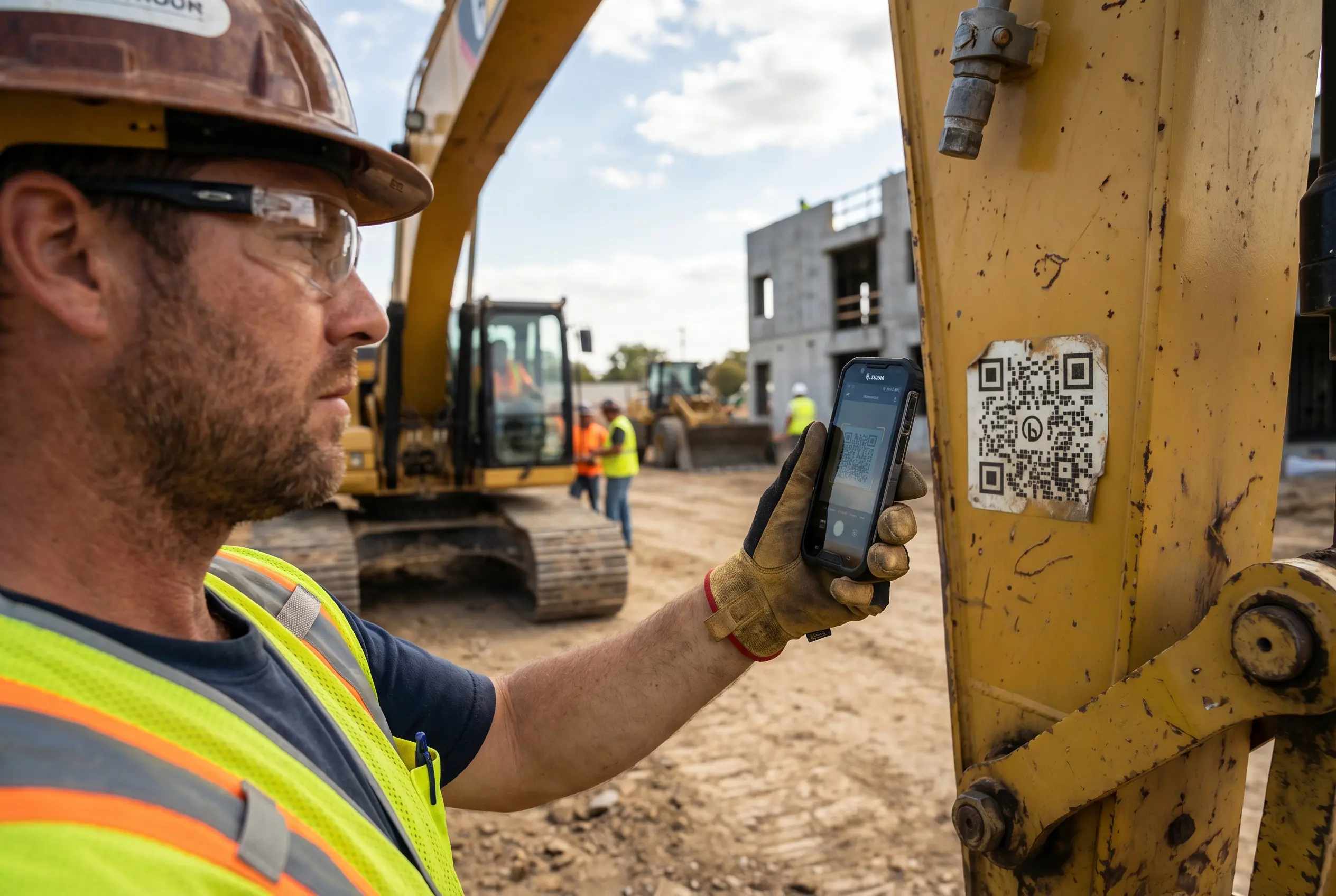
Here's how it works in practice. Every piece of equipment on site gets a QR code. A worker walks up to an electrical panel, scans the code with their phone's camera, and the equipment's full tamper seal chain loads in their browser. No app download. No login screen on a shared tablet. Just instant access to the current seal status and complete break history.
When that worker needs to break a seal for authorized maintenance, they log the break right there. The system records who broke it, when, and the seal's new status changes from Sealed to Broken. That record is immediately visible to supervisors, safety managers, and anyone else with access to the project dashboard.
The real value shows up in what happens next. If that broken seal isn't re-sealed within a configurable time window, say 10 hours, the system flags it as overdue. That alert shows up on the dashboard. The safety manager doesn't have to remember to check. The system does the remembering.
Spreadsheets are passive records. Digital tamper seal management is an active system that watches for problems and surfaces them before they become compliance failures. That's the difference.
Tamper Seal Tracking for Data Center Construction
Data center construction projects operate under a different level of scrutiny than typical commercial builds. Clients like hyperscalers and colocation providers require audit-ready compliance records for physical security from day one of construction. Tamper seals on server hall enclosures, mechanical/electrical rooms (MERs), and loading dock access points aren't optional. They're contractual requirements.
The challenge is scale and organization. A large data center campus can have dozens of distinct zones, each with sub-locations containing multiple pieces of sealed equipment. A spreadsheet can list all of those seals, but it can't give you a rollup view showing that Building A's MER-3 has two broken seals while Building B is 100% sealed. That kind of hierarchical visibility matters when you're reporting to a client security team.
FieldScout's [site location tree](/data-centers) was designed for exactly this scenario. Seals are organized by your actual site hierarchy, campus, building, floor, room, with rollup statistics at every level. You can see sealed percentage, broken count, and pending count for any location without drilling into individual equipment records. When a client asks "what's the seal status for Hall C?" you have the answer in seconds, not hours.
Chain of custody matters on these projects too. Every seal break records who did it, creating the auditable trail that data center clients and insurance carriers require. That attribution isn't a nice-to-have. It's often a contractual deliverable.
What Good Tamper Seal Management Software Should Include
If you're evaluating tools for tamper seal tracking, here's what separates a purpose-built solution from a generic checklist app with a seal field bolted on. Most safety platforms treat tamper seals as a single checkbox inside an inspection form. That's not tracking. That's data entry with no follow-through.
- QR code scanning for instant equipment lookup. Workers shouldn't need to search through a list or remember equipment IDs.
- Status tracking with defined states (Sealed, Broken, Pending), not a free-text field where someone types 'ok' or 'broke it'
- Full break history per seal chain with timestamps and the name of the person who broke it. This is your audit trail.
- Overdue alerts when broken seals aren't re-sealed within a configurable window. The system should watch for problems so you don't have to.
- Dashboard rollups by site location. See seal status at the zone, building, or room level without opening individual records.
- Browser-based access with no app download. Field workers on any device can scan, log, and check status without IT involvement.
How FieldScout Handles Tamper Seal Management
FieldScout built tamper seal chains as a first-class feature, not an afterthought. Each piece of equipment can have one or more tracked seal chains, each with a clear status: Sealed, Broken, or Pending. Every status change is timestamped and attributed to the person who made it.
The [dashboard](/product) gives safety managers real-time rollups: total chains across the project, sealed percentage, broken count, pending count, and total historical breaks. Those stats are available globally and broken down by site location, so you can spot problem areas without clicking through individual equipment records.
Overdue detection runs automatically. If a seal has been in Broken status for more than your configured re-seal window, it gets flagged on the dashboard. No cron job to set up. No formula to maintain. The system knows when something needs attention and tells you.
QR codes tie the digital record to the physical equipment. Workers scan with their phone camera and get the full seal chain in their browser. No app store visit. No IT ticket. This matters because the biggest barrier to good tamper seal data isn't the software. It's field adoption. The easier you make it to log a seal break, the more likely it actually gets logged.
For teams already using FieldScout for [safety inspections](/blog/complete-guide-construction-safety-inspections), permits, or worker onboarding, tamper seal management fits into the same platform. One login, one dashboard.
Competitors Treat Tamper Seals as an Afterthought
SafetyCulture and Procore are strong platforms for general inspection management. But neither offers a dedicated tamper seal tracking workflow. There's no concept of a seal chain with defined statuses. No break history per piece of equipment. No chain-of-custody attribution. No overdue alerting when a broken seal sits unaddressed.
What they offer is a checklist item. You can add a field that says "Tamper seal intact: Yes/No" inside an inspection template. That captures a single point-in-time observation. It doesn't track the seal's lifecycle. It doesn't alert when something goes wrong between inspections. And it doesn't give you rollup visibility across a multi-zone site.
HammerTech doesn't surface tamper seal overdue alerts or broken-seal escalation workflows in their documentation or marketing materials. The gap isn't subtle. Nobody in the construction safety software space has built tamper seal management as a tracked, auditable workflow. That's the category FieldScout is defining.
If tamper seals are a contractual requirement on your projects, and on data center work they almost always are, a generic checkbox isn't going to satisfy your client's audit expectations.
Getting Started: Moving Your Team Off Spreadsheets
Transitioning from spreadsheet-based tamper seal tracking to a digital system doesn't require a massive change management effort. The process is straightforward. You're not changing how your team works in the field. You're just replacing a slow, silent record with one that actually tells you when something's wrong.
Start by inventorying your sealed equipment. Walk your site and catalog every piece of equipment that currently has or should have a tamper seal. For each one, note the location within your site hierarchy. This step alone often reveals gaps, equipment that should be sealed but isn't, or seals that were applied but never logged.
Next, tag your equipment with QR codes. FieldScout's codes system lets you generate and print QR labels that link directly to the equipment record. Once a code is on the panel, anyone with a phone can pull up the seal chain. This is the moment field adoption goes from 'another thing to log' to 'scan and go.'
Map your site locations to match your actual project layout. If you're on a data center campus, that means buildings, floors, and rooms. If you're on a commercial build, it might be wings, zones, and floors. The hierarchy you set up determines how your rollup views work, so spend ten minutes getting it right.
Set your re-seal window based on project requirements. Some clients want broken seals addressed within 4 hours. Others allow 24 hours. Configure the overdue threshold to match, and the system handles the rest.
The whole setup takes less than a day for most sites. After that, your tamper seal data is live, attributed, and alerting, instead of sitting in a spreadsheet that nobody checks until audit day.
See Tamper Seal Management in Action
If your team is still tracking tamper seals in spreadsheets, you already know the pain points. Gaps in the log. No alerts when seals stay broken. Audit prep that eats up hours you don't have.
FieldScout was built for the way construction sites actually work. QR codes on equipment, real-time status tracking, automatic overdue alerts, and dashboard rollups that give you the full picture without digging through rows of data.
Whether you're running a data center build with strict security compliance or a commercial project where equipment integrity matters, FieldScout's tamper seal management gives your team the visibility and accountability that spreadsheets can't.
See how FieldScout handles tamper seal tracking for your next project.